Budget and prices
What a suitcase costs per trip, and when the cheap one wins
Divide the case by the trips it will make. At three trips a year over ten years an example $350 case is $11.67 a trip in AUD, GST included.
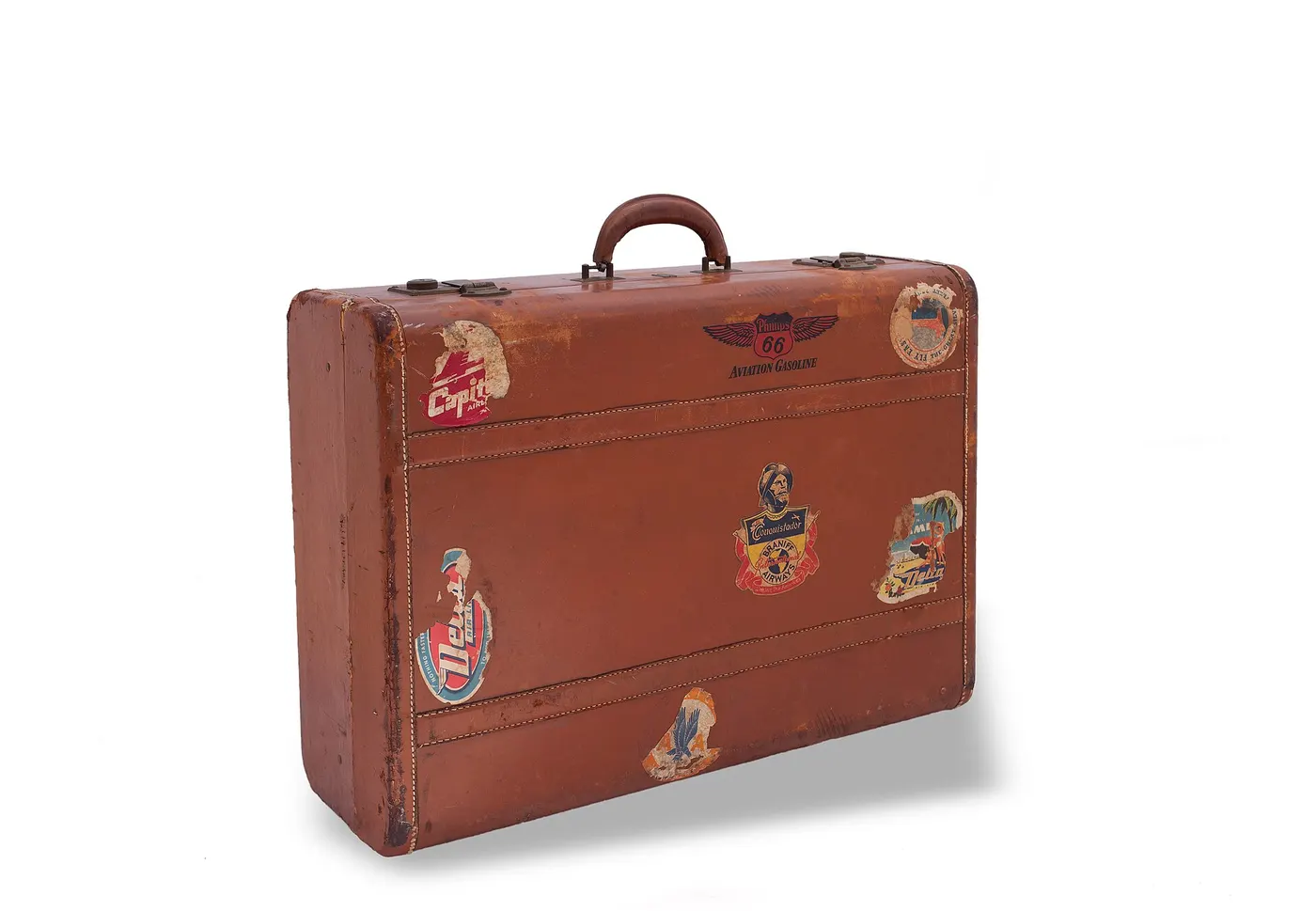
Luggage is priced as an object and consumed as a service. The number that matters is the purchase price divided by the number of trips the case will survive, and that denominator is set by how often you travel and how well the wheels are made.
This guide does that division, adds the costs that arrive separately, and compares buying locally with buying overseas. Australian consumer prices are advertised GST inclusive, so every figure here already includes GST. All prices are examples used to show the method; this site has no price feed and sells nothing.
Trips, not years, are the denominator
One trip a year over 10 years is 10 trips. Three a year is 30 and six a year is 60. An example $350 case is therefore $35.00 a trip, $11.67 a trip or $5.83 a trip depending only on how often it leaves the cupboard.
The Australian Bureau of Statistics recorded 986,250 short-term return trips by Australian residents in August 2026, up 1.5% on the same month a year earlier, with Indonesia at 178,830, New Zealand at 120,830 and the United Kingdom at 57,950 the three largest return origins. Those are overseas trips only; domestic trips add to the denominator and are the ones people forget to count.
Count honestly, including weekends away and work travel. The gap between two trips a year and five is the difference between a case being an indulgence and a case being infrastructure.
| Case price | 1 trip a year (10) | 3 trips a year (30) | 6 trips a year (60) |
|---|---|---|---|
| $150 | $15.00 | $5.00 | $2.50 |
| $350 | $35.00 | $11.67 | $5.83 |
| $800 | $80.00 | $26.67 | $13.33 |
Each cell is the case price divided by the trip count in the column heading. No repair cost is added and no resale value is subtracted; both are handled below.
The charge that dwarfs the case
Excess baggage is charged per bag or per kilogram and it is the one travel cost that can exceed the item it applies to. Take an assumed $90 excess charge, which is a figure used here purely as an illustration. Against an example $350 case at three trips a year, $90 is nearly eight trips' worth of the $11.67 per-trip cost.
That is why empty weight belongs in this guide and not only in the choosing guide. A case 1.6 kg lighter gives back 1.6 kg of payload on every trip, and the trip where that 1.6 kg is the difference between compliant and charged pays for the whole case.
Weigh the packed bag at home on bathroom scales before you leave: stand on the scales, note the figure, then stand on them holding the bag and subtract. It takes 2 minutes and it is the only version of this check that happens before the airport rather than at it.
- Count the trips you will realistically make in a year, domestic trips included
- Multiply by the years you expect the case to last to get the denominator
- Divide the case price by that number to get the cost per trip
- Compare that figure with one assumed excess baggage charge, not with the price of a second case
- Weigh the packed bag at home, because the correction is free there and expensive at the counter
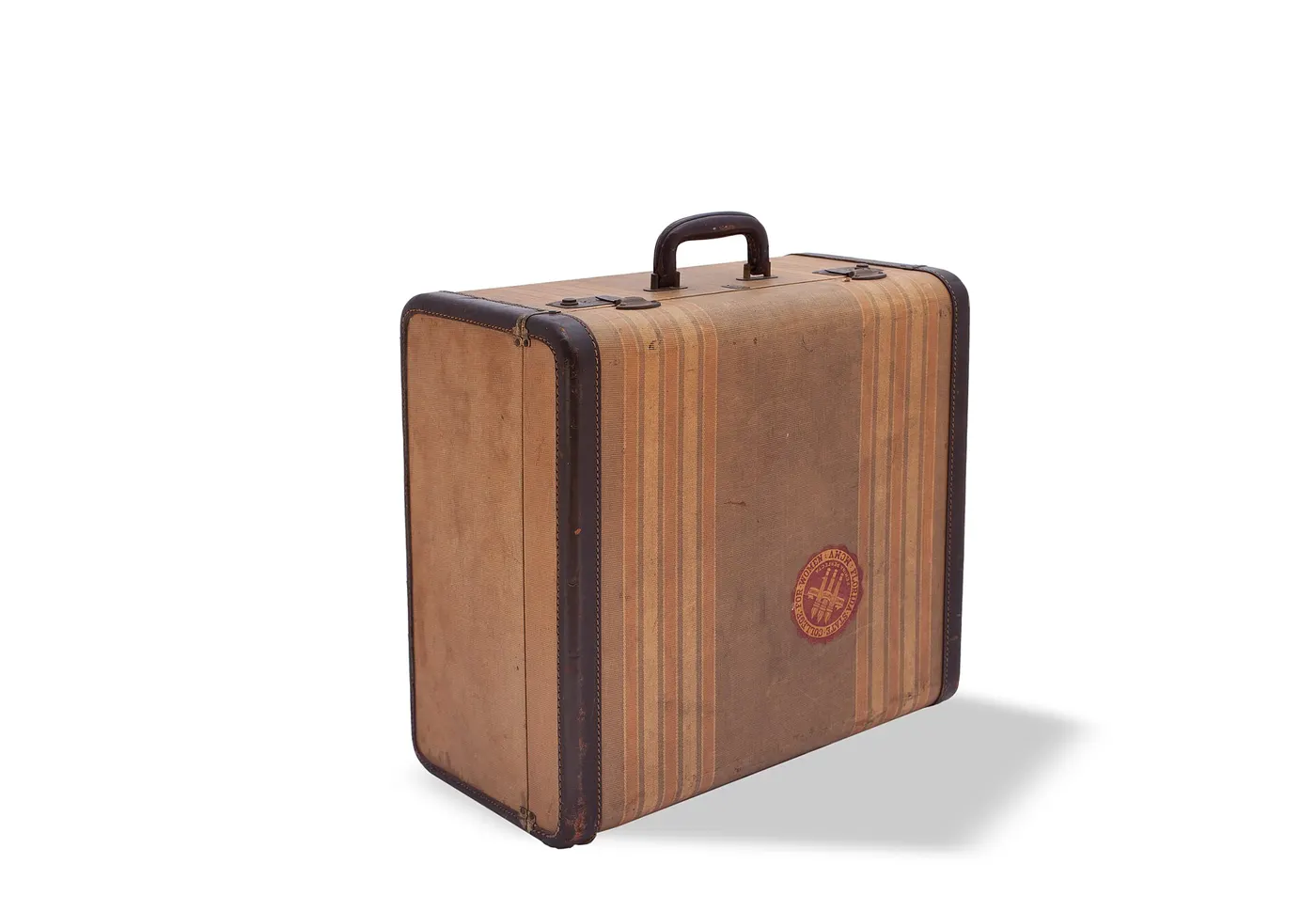
Repairs, spare parts and the second decade
A case that reaches year ten has usually had something replaced. Wheels and the telescopic handle are the two components that go first, and on a model with a published spare parts list they are an example $30 to $80 fitted. On the $350 case at three trips a year that is the equivalent of three to seven trips' worth of cost, and it buys another decade.
A case without a parts list is a disposable item at the first wheel failure, whatever it cost. That is the strongest argument in this guide for paying more at the outset: the $800 case at six trips a year is $13.33 a trip, and the same case kept 20 years through one wheel replacement is $6.67.
Resale is negligible on luggage and should not be counted. Unlike gym equipment or furniture, a used suitcase has almost no market, so the honest arithmetic treats the purchase as fully consumed.
| Scenario | Total cost | Trips | Cost per trip |
|---|---|---|---|
| Case discarded at the first wheel failure, year 5 | $350 | 15 | $23.33 |
| Case kept 10 years, no repair | $350 | 30 | $11.67 |
| Case kept 20 years with one $60 wheel set | $410 | 60 | $6.83 |
The $60 wheel set is the midpoint of the $30 to $80 range in the text. The point of the table is the spread: the same case costs between $6.83 and $23.33 a trip depending entirely on parts availability.
Buying from overseas: two numbers to add first
business.gov.au states that most imports are subject to 10% goods and services tax, and that most goods valued up to A$1,000 can be imported without a formal import declaration. On an example $300 case bought from an overseas seller, the GST is $30, taking the landed figure to $330 before freight.
Freight is the larger variable on luggage because a suitcase is a large, light box and is charged on volume rather than weight. An example $120 of freight on that $300 case takes the landed total to $450, against a $350 local price that already includes GST. The landed-cost calculator on this site adds both so the comparison is like for like.
The other cost appears in year three. A warranty claim or a parts order from an overseas seller means freight in both directions, and the consumer guarantees under Australian law are most straightforward to enforce against a seller located in Australia. On a $30 GST saving, that is not a close decision.
What the spending figures say about timing
The Australian Bureau of Statistics monthly household spending indicator for August 2026 recorded total household spending up 6.8% on August 2025, with clothing and footwear down 1.0% on the month and recreation and culture down 1.4%. Discretionary categories were soft while the overall total rose.
The monthly consumer price index indicator for September 2026 put the all-groups figure up 4.3% over 12 months and recreation and culture up 4.5%. Nothing in those numbers suggests waiting improves the price, and the per-trip arithmetic above says the saving comes from trips made, not from the month you buy in.
Before you buy
- Count realistic trips a year, including domestic ones, then multiply by the years you expect to keep the case
- Divide the purchase price by that trip count to get the cost per trip
- Compare the result with one assumed excess baggage charge rather than with another case's price
- Confirm wheels and the handle are sold as parts, because that doubles the denominator
- Weigh the packed bag at home on bathroom scales before every trip
- Add 10% GST and volumetric freight before comparing an overseas price with a local one
- Do not count resale value on luggage; treat the purchase as fully consumed
Questions readers ask
- Is one large case or two smaller ones better value?
- Two smaller cases usually cost more to buy and more per trip, because each one is used less often. They win when the household travels separately or when the trips are genuinely different in length. On the arithmetic above, a single case at six trips a year is always cheaper per trip than two cases at three trips each.
- Does a hard shell or a soft side last longer per dollar?
- Neither consistently, because they fail differently and both usually fail at the wheels first. The decisive factor in the table above is not material but parts availability, which turns a 10 year case into a 20 year one and halves the cost per trip. Material changes what a damaged case looks like, not how long it lasts.
- Should a cabin-only strategy replace checked luggage?
- On the illustrative 7 kg cabin allowance used on this site, a 1.8 kg case leaves 5.2 kg of payload, which is a few days of clothing and nothing else. It saves checked bag fees and waiting time, and it stops working on any trip needing more than about 5 kg of contents or carrying restricted items.
- Is an expensive case ever justified at one trip a year?
- On this arithmetic, rarely: an $800 case at one trip a year is $80.00 a trip over 10 years against $15.00 for a $150 case. The exception is where the expensive case has a published parts list and the cheap one does not, because the cheap case is then likely to be replaced twice in the same decade.
Sources
- Australian Bureau of Statistics — Overseas Arrivals and Departures, August 2026 (986,250 short-term return trips by residents, up 1.5%; Indonesia 178,830, New Zealand 120,830, United Kingdom 57,950) — checked 2026-11-03
- Australian Bureau of Statistics — Monthly household spending indicator, August 2026 (total spending up 6.8% on a year earlier; clothing and footwear down 1.0% on the month) — checked 2026-11-03
- business.gov.au — Importing and your business (10% GST on most imports; goods up to A$1,000 generally need no formal import declaration) — checked 2026-11-03
Some links on this site can earn us a commission. That does not change which product a guide recommends, and it adds nothing to your price. Advertising is not enabled on this site yet. When it is, ads will be labelled and kept visually separate from the guides.