How to choose
The four measurements that choose a suitcase for you
External size, empty weight, wheel type and shell material settle most luggage decisions. How to read each one off a specification sheet before you look at a price.
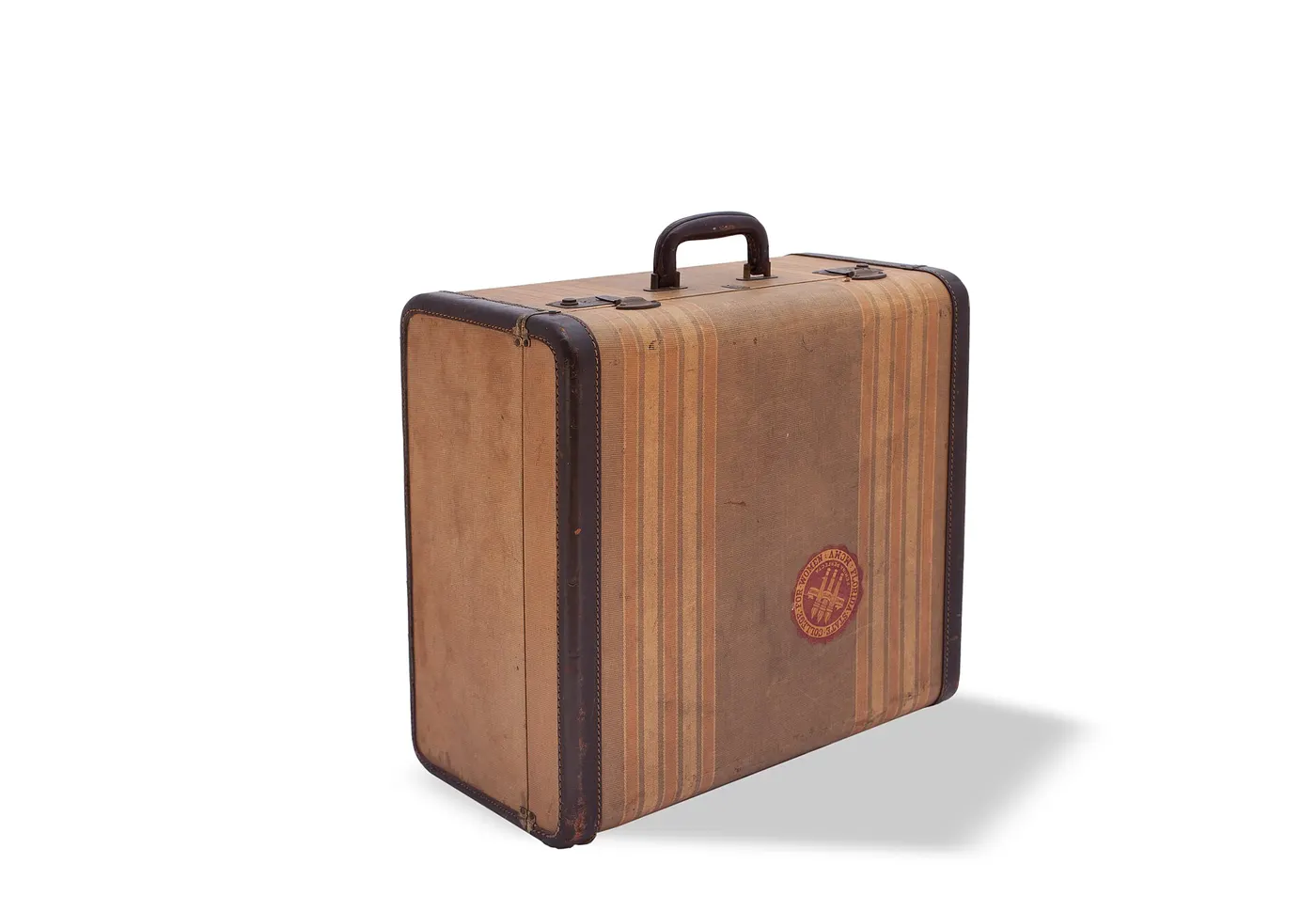
A suitcase is bought on appearance and lived with on four numbers: how big it is on the outside, how much it weighs empty, how it rolls, and what the shell does when something is dropped on it. All four are on the manufacturer's specification sheet and none of them is on the shelf tag.
This guide takes them in the order they matter. Australian residents made 986,250 short-term return trips from overseas in August 2026 alone according to the Australian Bureau of Statistics, so this is a decision a great many households make every year. Every weight limit used below is an illustration; the binding number is the one printed on your own ticket. No price here is a live price, and this site carries no price feed.
External size is measured with the wheels and the handle
Airline cabin sizers measure the outside of the bag including wheels, feet and the retracted handle housing. Manufacturers sometimes publish the case body dimensions and list the wheels separately, which is how a bag advertised as cabin sized fails at the gate by 30 mm.
Take the specification sheet's overall dimensions, not its body dimensions, and if only one set is published, add 25 to 40 mm to the height for spinner wheels. Then compare with the limit on your own ticket rather than with a generic figure, because carriers differ and the same carrier differs between domestic and international.
Expansion zips are the second trap. A case that measures within a cabin limit when flat is over it when the expansion is used, and the expansion is used on the return leg precisely when the sizer is most likely to come out.
| Figure | Where it hides | The mistake it prevents |
|---|---|---|
| Overall external dimensions | Sometimes listed only as body size | A bag that is 30 mm over at the sizer |
| Expanded dimensions | Often omitted entirely | A case that fits outbound and not inbound |
| Empty weight | Usually published; rarely read | Paying to carry the case instead of the clothes |
| Capacity in litres | Published, and the one people compare | Comparing two cases on the least useful number |
| Wheel type and count | In the description, not the table | A two-wheel case bought for terminal use |
| Shell material and thickness | Marketing names, not materials | Expecting a hard shell to behave like a soft one |
Capacity in litres is the figure most prominently advertised and the least decisive, because two cases of the same volume can differ by more than a kilogram in empty weight.
Empty weight is the number that costs you every trip
Every gram of case is a gram of clothes you cannot take. Using 7 kg as an illustrative cabin allowance, a 1.8 kg case leaves 5.2 kg of payload and a 2.6 kg case leaves 4.4 kg. That is 26% of the allowance against 37%, and an 18% difference in what you can actually pack.
On checked luggage the proportions are gentler but the absolute numbers are larger. Against an illustrative 23 kg allowance, a 3.4 kg case leaves 19.6 kg and a 5.0 kg case leaves 18.0 kg. The 1.6 kg difference is a pair of boots and a jumper, on every single trip for the life of the case.
Lighter is not automatically better. A very light shell is usually thinner, and a case carried four times a year for 10 years makes 40 trips through baggage systems. The useful comparison is empty weight against published warranty length, not empty weight on its own.
| Case empty weight | Allowance used as the example | Payload left | Share of allowance the case takes |
|---|---|---|---|
| 1.8 kg | 7 kg cabin | 5.2 kg | 26% |
| 2.6 kg | 7 kg cabin | 4.4 kg | 37% |
| 3.4 kg | 23 kg checked | 19.6 kg | 15% |
| 4.2 kg | 23 kg checked | 18.8 kg | 18% |
| 5.0 kg | 23 kg checked | 18.0 kg | 22% |
The 7 kg and 23 kg figures are illustrations used to make the arithmetic concrete. Substitute the allowance printed on your own ticket in the packed-weight calculator on this site.

Wheels, and the surfaces they will actually meet
Four-wheel spinners roll sideways and take no weight on the arm, which is why they dominate airport terminals. They also sit higher, add 25 to 40 mm to the external height, and roll badly on anything other than a smooth floor. Two-wheel cases tilt and tow, carry part of the load on the wheels and part on your arm, and handle kerbs, gravel and tram tracks far better.
Decide this by the trip, not the catalogue. A case that lives between a taxi and a hotel lobby wants four wheels. A case that gets dragged along footpaths between train stations wants two. A household making several different kinds of trip is better served by two cases of different sizes than by one compromise.
Whichever you choose, confirm the wheels are a replaceable part. Wheels and the telescopic handle are the two components that fail most often, and a case with a published spare parts list reaches year ten while an identical case without one does not.
- Four wheels: lowest effort on smooth floors, adds 25 to 40 mm of height, poor on rough ground
- Two wheels: better on kerbs and gravel, carries part of the load on your arm
- Check whether wheels and the handle are sold as spare parts for that exact model
- Sealed bearings last longer than open ones on wet and gritty surfaces
- A wheel housing recessed into the shell survives a conveyor better than one bolted on
Shell material, zips and what the warranty covers
A hard shell resists crushing and does not absorb water; a soft side absorbs the extra jumper and tolerates being over-packed. Polycarbonate flexes and returns, ABS is cheaper and cracks rather than flexing, and aluminium dents permanently but does not crack at all. None of these is better in general; they fail differently.
The zip is where most cases actually die. A chain zip with metal teeth survives a forced over-pack; a coil zip with a plastic spiral is lighter and splits when stressed. On a hard case the zip is also the water path, so a storm flap over the chain matters more than the shell thickness.
Published warranties on luggage range widely and often exclude airline handling damage, which is the most common damage there is. Underneath any warranty sit the consumer guarantees in the Australian Consumer Law, which a seller cannot remove. The Australian Consumer Law site states that these rules protect buyers anywhere in Australia and apply uniformly across every state and territory, and the relevant guarantee is that goods are of acceptable quality and last a reasonable time for the price paid.
Where a seller names a standard, it can be checked. Standards Australia develops the Australian Standards consumer goods are tested against and sells them through its Standards Store under 3, 6 and 12 month licences rather than publishing the text free, so a standard quoted by number is verifiable and a claim of "airline grade" with no number attached is not.
| Shell | Strength | How it fails | Suits |
|---|---|---|---|
| Polycarbonate | Flexes under load and returns | Scuffs and stress whitening at corners | Checked bags that are handled hard |
| ABS | Cheapest hard shell, light | Cracks rather than flexing | Occasional trips, lower outlay |
| Aluminium | Will not crack, closes on latches not zips | Dents permanently, heaviest empty | Long ownership, accepted cosmetic wear |
| Ballistic nylon | Absorbs over-packing, external pockets | Abrasion and water ingress at seams | Cabin bags and mixed-surface travel |
We have not tested any case. This table describes documented material behaviour so you can match a failure mode to your trips, not a ranking of products.

Settle it in this order
Read the allowance on the ticket you buy most often. Find cases whose overall external dimensions, wheels included, sit inside it. Of those, take the lightest with a published spare parts list. Only then choose between hard and soft on the trips you actually make.
Done this way the shortlist usually has three or four cases on it and the remaining decision is colour. Done in reverse, the case arrives, fits nothing and is kept anyway.
- Write down the allowance printed on the ticket you buy most often
- Collect overall external dimensions, including wheels and handle housing, for each candidate
- Rank the survivors by empty weight, not by capacity in litres
- Confirm wheels and the telescopic handle are sold as spare parts for that model
- Choose hard or soft by how the case fails, not by how it looks on a shelf
- Keep the receipt and the model number together for any later guarantee claim
Before you buy
- Write down the cabin and checked allowance on the ticket you buy most often
- Collect overall external dimensions including wheels, not just the case body
- Note the expanded dimensions, or assume the expansion makes the bag non-compliant
- Compare candidates on empty weight before comparing them on capacity in litres
- Confirm wheels and the telescopic handle are listed as spare parts for the exact model
- Match shell material to how you travel, using the failure mode rather than the finish
- File the receipt and model number together on the day the case arrives
Questions readers ask
- Is a four-wheel case always easier?
- On a terminal floor, yes. On a footpath with kerbs, on gravel, or anywhere you are towing rather than pushing, a two-wheel case is less work and far less likely to tip. The four wheels also add 25 to 40 mm of external height, which is enough to fail a cabin sizer that a two-wheel case of the same body size would pass.
- How much does capacity in litres actually tell me?
- Less than the external dimensions and the empty weight do. Two 40 litre cabin cases can differ by more than a kilogram empty, which on an illustrative 7 kg allowance is a quarter of what you can pack. Litres are useful for comparing the same case across sizes and close to useless for comparing different models.
- Are TSA-approved locks worth having on an Australian itinerary?
- They matter on any itinerary that touches the United States, where screeners can open and relock them without cutting. On a purely domestic Australian trip, a lock mainly deters casual opportunism and keeps zips closed on a conveyor. A lock is not a security system on a case whose coil zip can be opened with a biro.
- How long should a suitcase last?
- A case used three times a year makes 30 trips in 10 years, and wheels and the handle are what reach their limit first. With a published spare parts list, both are replaceable for an example $30 to $80 and the shell outlives them. Without one, the first wheel failure ends the case.
Sources
- Australian Bureau of Statistics — Overseas Arrivals and Departures, August 2026 (986,250 short-term return trips by Australian residents, up 1.5% on a year earlier) — checked 2026-11-03
- Australian Consumer Law — consumer rights and protections overview (rules apply uniformly across every state and territory) — checked 2026-11-03
- Standards Australia — how Australian Standards are developed, purchased and licensed — checked 2026-11-03
Some links on this site can earn us a commission. That does not change which product a guide recommends, and it adds nothing to your price. Advertising is not enabled on this site yet. When it is, ads will be labelled and kept visually separate from the guides.